Puppy Enrichment
Puppy Enrichment: Practical Ideas
Quick answer
Enrichment means giving your puppy genuine opportunities to use their mind — scent work, problem-solving, novelty, appropriate independence — distinct from physical exercise, not a substitute for it.
What Enrichment Actually Means
Opportunities for natural, species-typical behaviors — sniffing, foraging, problem-solving, appropriate chewing — rather than a passive environment. See Exercise vs. Mental Stimulation for the evidence behind this being distinct.
Practical Categories
Scent-based activities; food-based problem-solving (see Food Enrichment); training as enrichment (see Puppy Training); novelty (new places, toy rotation); appropriate independence (see Teaching Independent Play).
If Boredom Seems to Be the Actual Problem
See Puppy Boredom for the diagnostic angle, and existing Puppy Chewing Everything if destructive chewing is the symptom.
Quick Reference
| Category | Examples |
|---|---|
| Scent-based | Sniffing walks, treat-scatter, nose-work games |
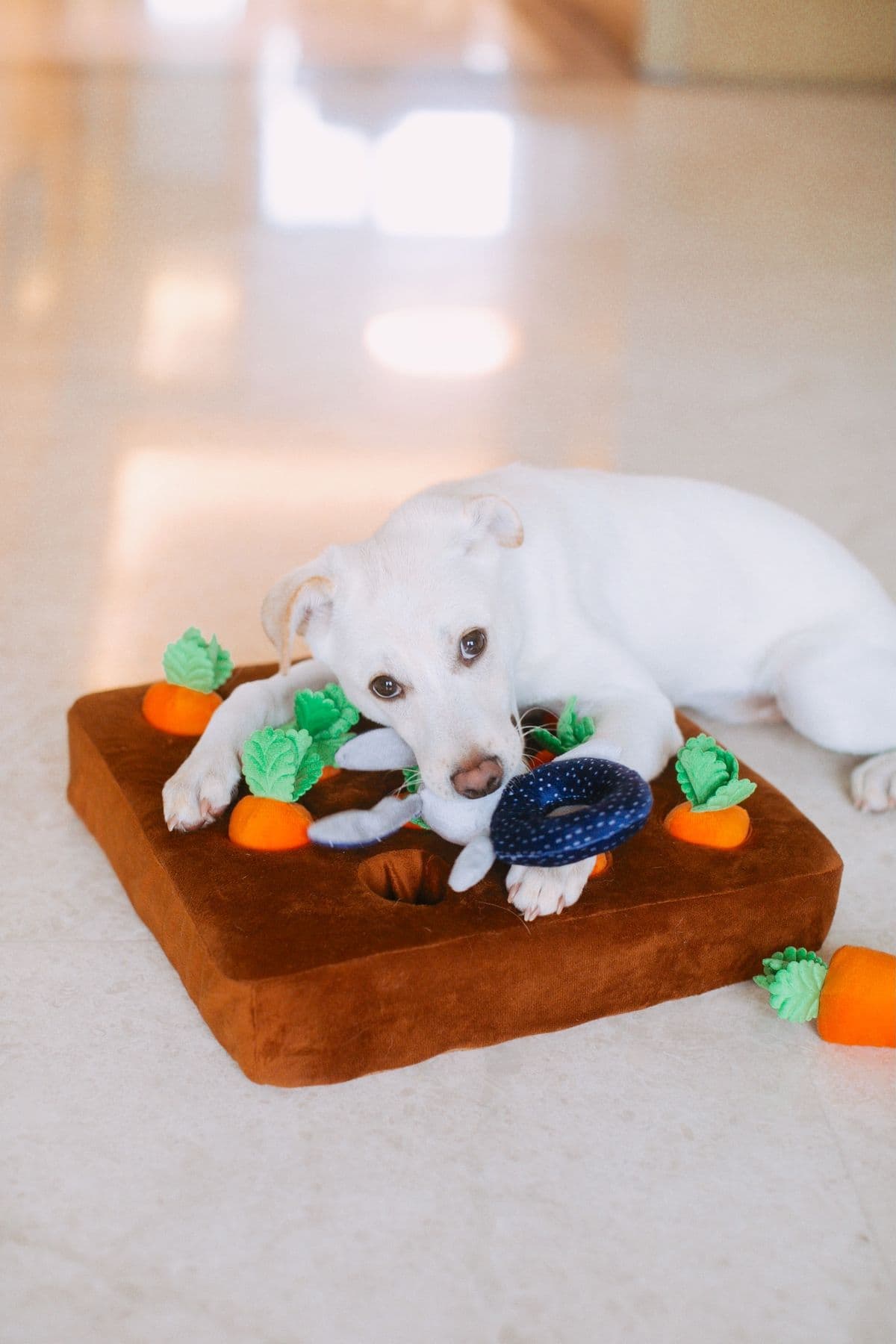
| Food-based problem-solving | Puzzle feeders, snuffle mats, lick mats, stuffed toys |
| Training | Short sessions, new skills |
| Novelty | New environments, rotated toys |
| Independence | See Teaching Independent Play |
Want enrichment ideas built for your puppy?
Get a plan that covers mental engagement, not just exercise.
Common Mistakes
- Treating enrichment as optional.
- Never rotating toys.
- Assuming physical exercise alone covers this need.
Safety and Behavior Red Flags
Not directly applicable; see existing Puppy Chewing Everything for destructive-behavior red flags.
Sources
- Applies the evidence already reviewed at Exercise vs. Mental Stimulation