Puppy Enrichment
Food Enrichment for Puppies
Quick answer
Food-based enrichment turns eating into a problem-solving or scent-engaging activity — a genuine, low-risk way to add mental engagement, with a few practical safety considerations.
Why Food-Based Enrichment Works
Turning food into a problem-solving/foraging activity engages natural behaviors a bowl doesn't — a genuine, widely accepted environmental-enrichment principle.
The Main Categories
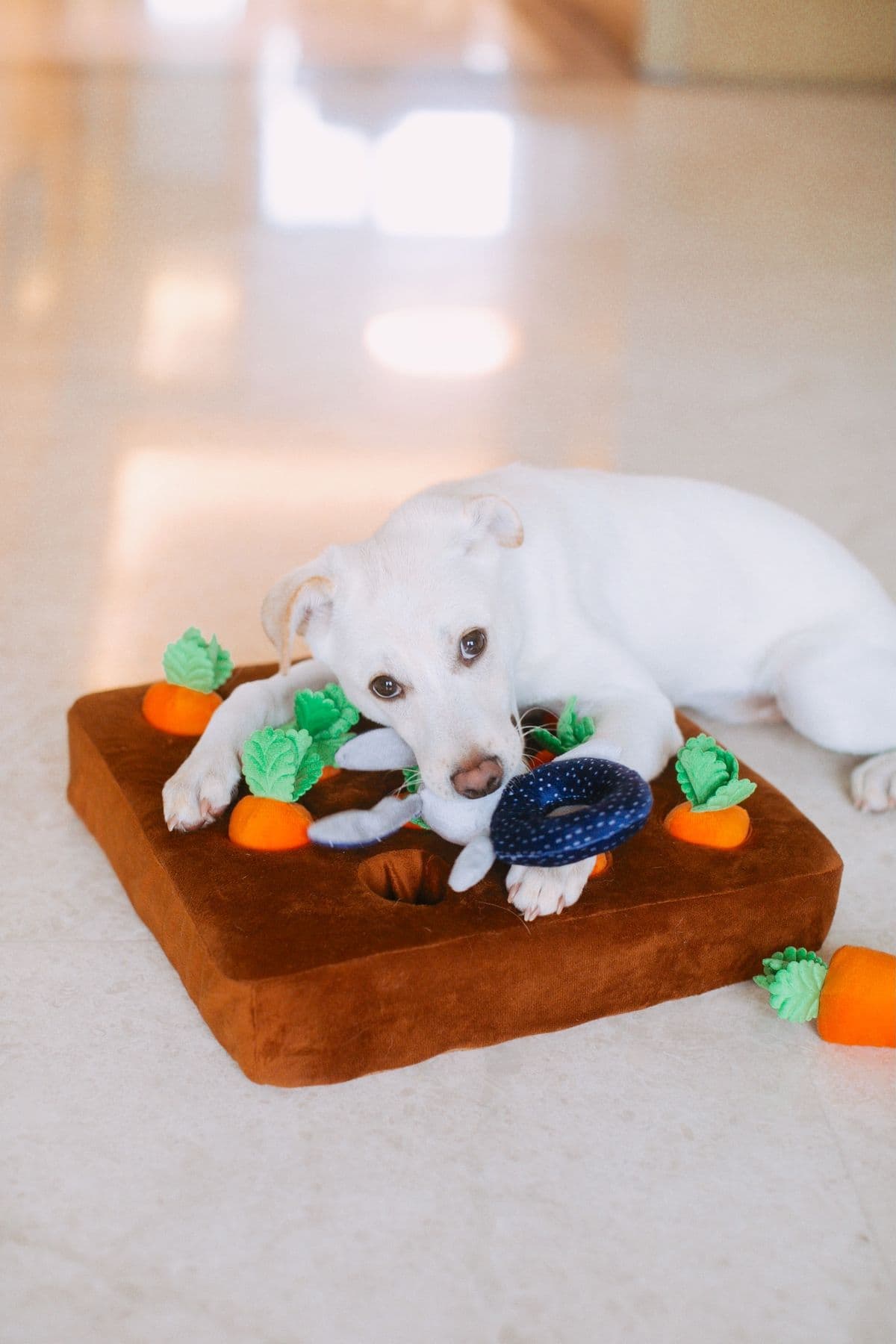
Puzzle feeders — manipulation-based food dispensing; introduce gradually. Snuffle mats — scent-based foraging specifically. Lick mats — repetitive licking, often useful as a calming tool. Stuffed/food-dispensing toys — often used during crate/alone-time (see existing Crate Training, Puppy Home Alone).
Practical Safety Notes
Portion awareness (this food counts toward daily intake, not extra); supervise new items until you know your puppy won't ingest non-food parts; appropriate difficulty (too hard too fast creates frustration); appropriate foods only, reasonable amounts on lick mats.
Distinguishing Real Value From Marketing
The general welfare principle is well-supported; individual product superiority claims are commercial claims, not independently verified research.
Quick Reference
| Type | Best for |
|---|---|
| Puzzle feeder | General problem-solving at mealtime |
| Snuffle mat | Scent-based foraging |
| Lick mat | Calming, repetitive engagement |
| Stuffed/food-dispensing toy | Crate time, alone-time practice |
Want to build enrichment into your routine?
Get a plan that fits food enrichment into your puppy's day.
Common Mistakes
- Treating enrichment food as extra calories.
- Leaving a new toy unsupervised.
- Too-difficult a puzzle too soon.
Safety and Behavior Red Flags
Attempting to chew apart/ingest toy pieces; persistent GI upset after a new enrichment food.
Sources
- General environmental-enrichment welfare principle, consistent with broadly accepted animal welfare science