Puppy Teething
Puppy Teething: What to Expect and How to Help
Quick answer
Teething happens in two separate phases — baby teeth erupting in the first weeks of life, then permanent teeth replacing them starting around 12 weeks — and increased chewing/mouthing is a normal, expected part of both phases, especially the second. What changes the answer: which phase your puppy is in changes what you'll actually see; a full timeline (including specific tooth types) is on the Teething Timeline page.
What Teething Actually Looks Like
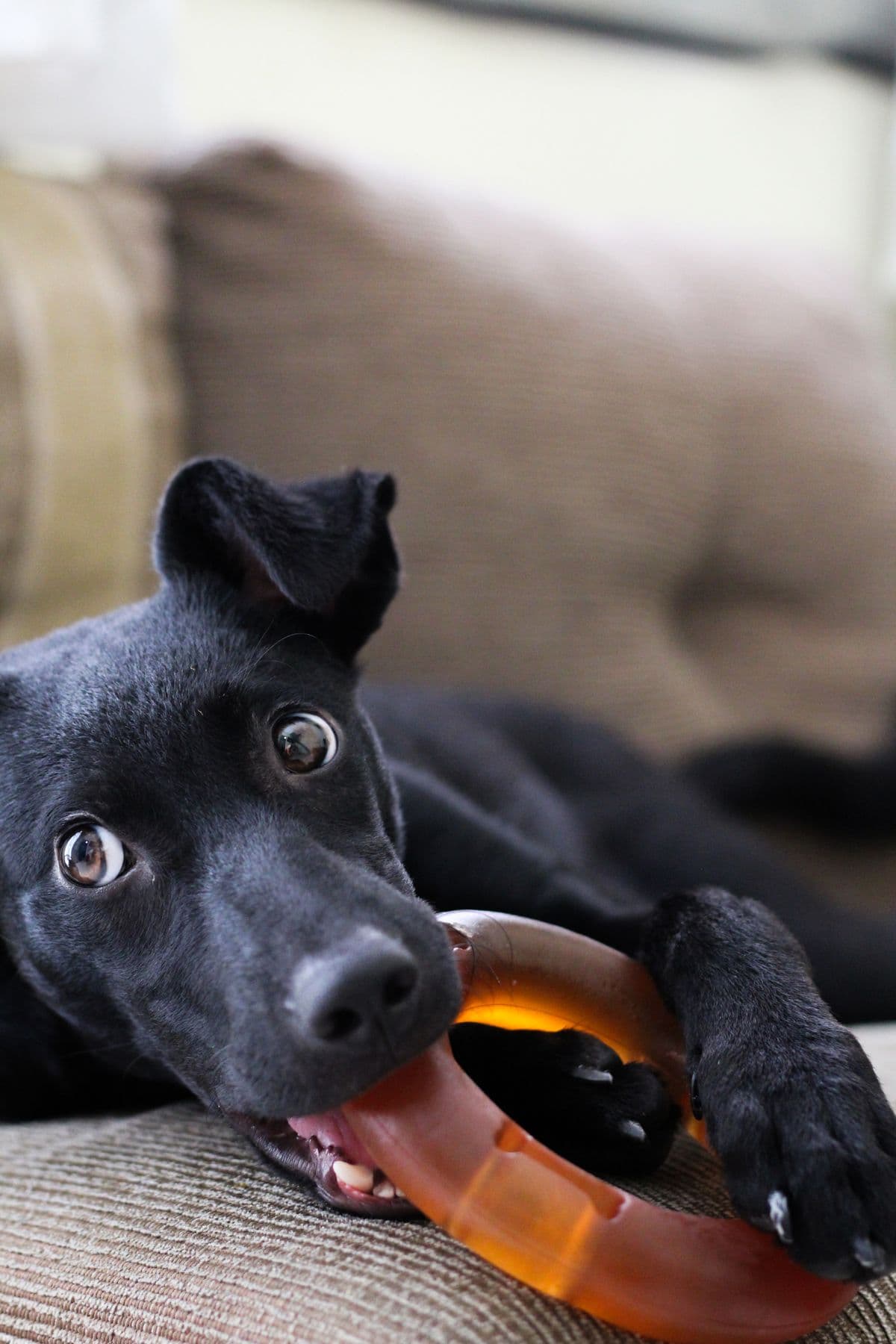
Increased chewing and mouthing on objects is the most common visible sign of teething — it's understood to help relieve gum discomfort as teeth erupt.1 You may also notice a stronger "puppy breath" smell and, later on, tiny teeth around the house as baby teeth fall out (many puppies also swallow them, which is normal and not a concern).
The Two Phases, Briefly
- Baby teeth (deciduous) erupting: happens very early, mostly complete well before most puppies come home with a new owner.
- Permanent teeth erupting, baby teeth falling out: starts around 12 weeks and continues to around 6 months — this second phase is generally the more intense, more chewing-heavy one.2
See Puppy Teething Timeline for the full week-by-week and tooth-type breakdown.
How to Help
- Offer appropriate chew toys, and rotate them for variety.
- Puppy-proof reachable areas rather than relying on your puppy to know what's off-limits.
- Redirect to an appropriate chew item when you catch inappropriate chewing, rather than punishing after the fact.
- See Puppy Chewing Everything if chewing is becoming a bigger management problem than typical teething discomfort explains.
Not Every Chewing Problem Is "Just Teething"
Teething is one real contributor to increased chewing, but boredom, insufficient exercise/mental stimulation, exploration, and (less often) anxiety are all separate, common contributors too3 — see Puppy Chewing Everything for the full breakdown. Don't assume a chewing problem will fully resolve once teething ends if the underlying driver is actually one of these other factors.
Is This Normal Teething?
- Increased chewing/mouthing on objects (not primarily on people — see Puppy Biting if it's mostly directed at hands/feet)
- "Puppy breath" or mild gum redness
- Age-appropriate for one of the two eruption phases (see the Timeline)
- No excessive bleeding, drooling, facial swelling, or refusal to eat
If the last box doesn't check, see "When to Call Your Veterinarian" below.
Mostly directed at hands or feet?
If mouthing is mostly directed at hands or feet rather than objects, this is the better fit.
What to Do Today
- Make sure appropriate chew toys are genuinely accessible, not just owned.
- Puppy-proof one more area if chewing is targeting something specific.
- Check your puppy's mouth briefly for anything unusual.
Common Mistakes
- Assuming all chewing is teething and missing a boredom/stimulation gap.
- Punishing chewing after the fact.
- Not checking for retained baby teeth as permanent teeth come in.
When to Call Your Veterinarian
Excessive bleeding, facial swelling, refusal to eat, a baby tooth clearly still present alongside an erupting permanent tooth (retained tooth — needs extraction to prevent crowding),4 or any mouth discomfort well beyond typical mild teething signs.