Potty Training
Puppy Won't Pee Outside? Why It Happens and What to Do
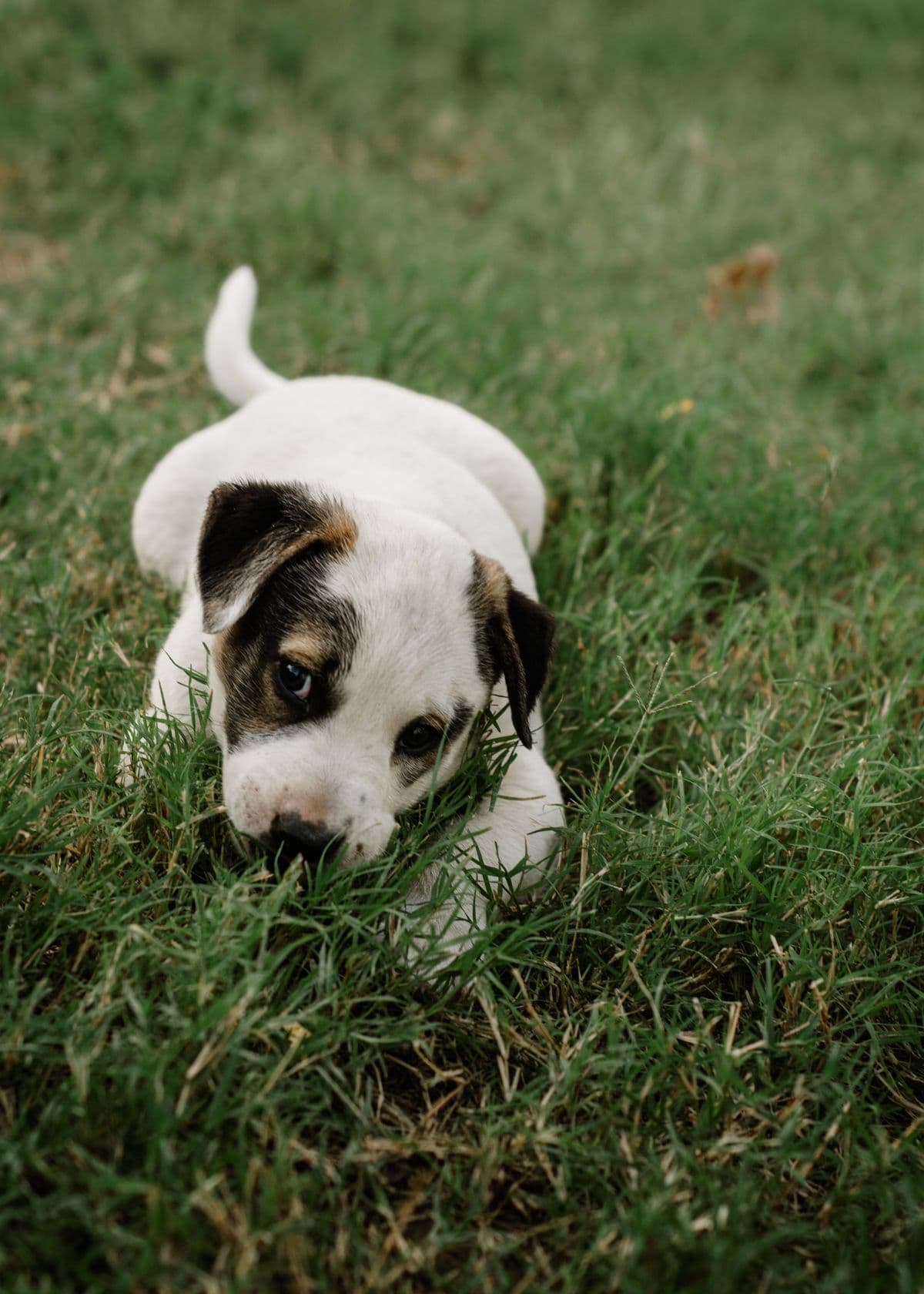
A puppy that won't eliminate outside — and then goes indoors instead — usually isn't being difficult. It's one of a handful of identifiable patterns: distraction, an unfamiliar or uncomfortable outdoor environment, a surface preference formed from indoor training, or (less often) something worth a vet visit. Not every puppy who avoids the yard is afraid — that's one possible cause among several, not the default explanation.
Cause → What to Try
| Cause | What It Looks Like | What to Try |
|---|---|---|
| Distraction | Sniffing everywhere, following sounds/movement, never settling into a "business" posture | Choose a lower-stimulation spot; keep initial trips short and boring; go with your puppy rather than letting them free-roam the yard |
| Unfamiliar/uncertain environment | Hesitant, hugging close to the door, reluctant to move away from you | Give it time and short repeated exposures; don't rush or drag; let your puppy explore the immediate area a bit before expecting elimination |
| Surface/substrate preference | Comfortable eliminating on carpet or pads indoors, but hesitant on grass/gravel/concrete | Gradually transition surfaces — VCA's own housetraining guidance treats toileting surface as something you actively manage, not something a puppy automatically generalizes1 — bring a piece of the indoor substrate (like a puppy pad) outside temporarily as a bridge |
| Leash/context difference | Fine off-leash in a fenced area, reluctant on-leash | Practice loose-leash time in the yard with no pressure to perform; let sniffing happen before expecting elimination |
| Weather discomfort | Reluctant specifically in rain, cold, or hot pavement | Shorten trips in extreme weather, dry paws/coat after, consider a covered spot near the door for very short trips |
| Possible medical cause | Straining, frequent small amounts, discomfort posturing, blood in urine | Stop treating as a training issue — a veterinary exam and history-taking is the appropriate next step2 |
Note: weather-related reluctance is a widely reported pattern among owners and trainers rather than a claim traced to a specific veterinary source in this research pass — included here as a plausible, commonly observed factor, not a verified physiological finding.
What to Do Right Now
- Rule out the obvious first: has anything changed (new yard, new season, recent scare outside)?
- Shorten the ask — a short, successful outdoor trip beats a long, frustrating one.
- Don't drag or force movement toward a spot; let your puppy set some of the pace within the boundaries you've set.
- If a fear response is present (cowering, tail tucked, reluctance to move at all — not just mild hesitation), slow down significantly rather than pushing through.
A Short Retraining Plan
- Days 1–2: No pressure to eliminate — just short, calm visits to the outdoor spot with treats and praise for simply being out there.
- Days 3–5: Begin rewarding any sniffing/investigating behavior in the target spot; keep sessions short.
- Days 6–7: Reward elimination the moment it happens, whenever it occurs during the visit — don't wait for a "perfect" attempt.
Want the rest of the plan mapped out day-by-day?
You just saw a 7-day skeleton. Get the full plan built around your puppy.
When to Loop In a Vet
If your puppy shows straining, discomfort, frequent very small amounts of urine, or blood in urine, this isn't a training pattern — it's a reason for a veterinary exam.2 A sudden change in a previously fine puppy (avoiding a spot it used to use without issue) is also worth mentioning to your vet, since a physical cause can look identical to a behavioral one from the outside.