Crate Training
How to Crate Train a Puppy: Step-by-Step Guide
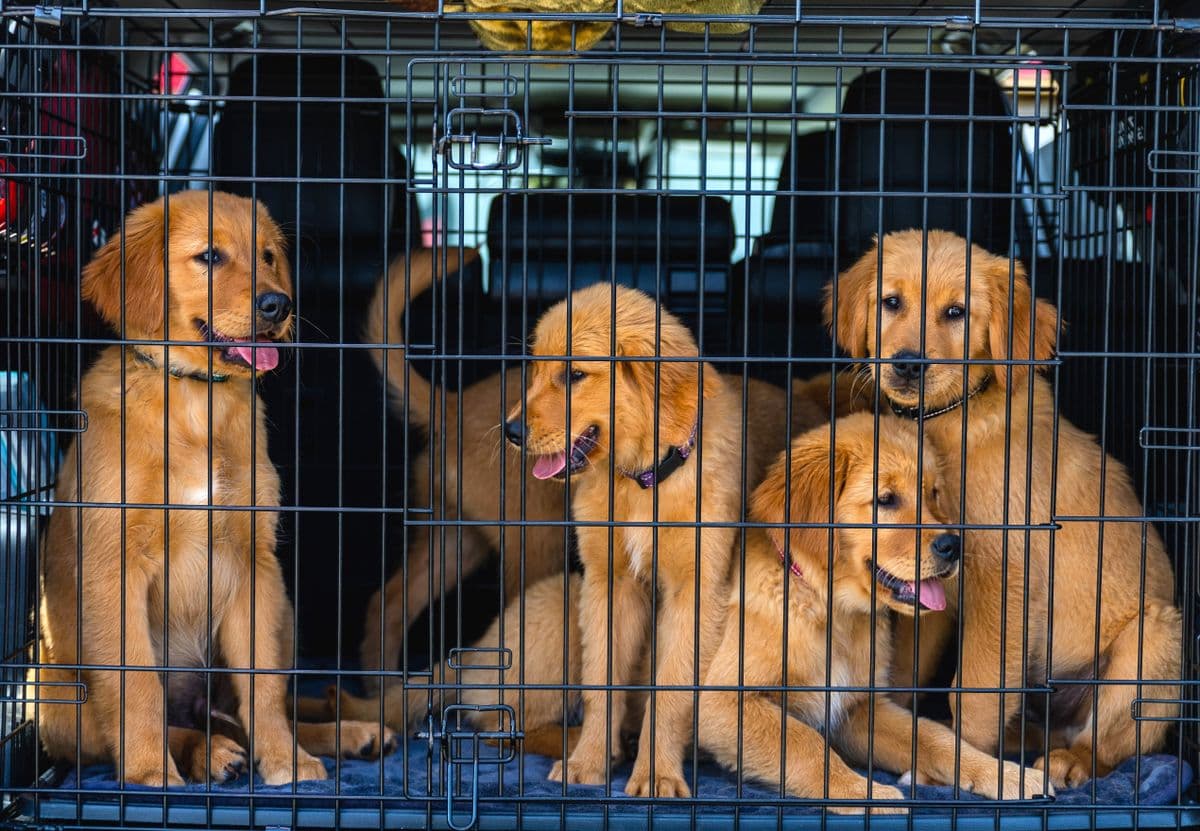
Done correctly, a crate becomes a puppy's own safe space, not a punishment. Dogs generally avoid eliminating where they sleep, which is part of why crate training is considered one of the fastest, most effective house-training tools when it's introduced gradually and positively.1 The key word is gradually — rushing the process is the most common reason crate training goes badly.
Choosing a Crate
Pick a crate large enough for your puppy to stand, turn around, and lie down comfortably — not much bigger. An oversized crate lets a puppy use one end as a bathroom and the other as a bed, which works against house training. If you're sizing for an adult dog, use a divider panel to shrink the usable space while your puppy is small.
Sample First 3 Days of Crate Training
This is one example progression, not a deadline. Many puppies need longer than three days at each stage, and that's completely normal — move to the next step only when your puppy is genuinely comfortable at the current one, not because three days have passed. Some puppies will need a week or more per stage; a small number will move faster. Base your pace on your puppy's comfort, not the calendar. (For the full staged progression beyond these first days, see the Crate Training Schedule.)
Example Day 1 — Make the crate a good place to be, door open. Toss treats inside throughout the day. Feed one full meal inside with the door open. Let your puppy wander in and out freely — no pressure, no closing the door yet.
Example Day 2 — Very short closures, with you right there. Once your puppy is entering the crate on its own for food, close the door for a few seconds while you sit nearby, then open it before any fussing starts. Repeat several short sessions through the day, gradually stretching to a few minutes — but only once the previous step feels easy and relaxed for your puppy, whether that took one day or several.
Example Day 3 — Build duration and add a short absence. Extend closed-door time to 10–20 minutes with a stuffed chew toy, staying in the room but not interacting. Try one short session where you leave the room for a minute or two and come back before your puppy gets upset.
If at any point your puppy shows real distress — excessive barking, panting, cowering — that's a signal to back up a step, not push through.2 This is a sample structure to adapt, not a schedule your puppy needs to keep up with.
Want the full week mapped out?
You just finished a 3-day sample. Get the rest of the week built around your puppy's pace.
Building Toward Full Duration
After the first few days, extend gradually — a matter of days to weeks, not a fixed timeline. As a planning guide, a puppy can generally manage more time in the crate after just having eliminated than right after waking or drinking, and daytime confinement generally shouldn't exceed about 2–3 hours for a young puppy who can't yet hold it longer.3 Overnight is different: many puppies can get through the night without needing a potty break by around 3 months old, even though they couldn't manage that duration during an active day.4
Nighttime Crate Training
Keep the crate near you at first (many owners start it in or near the bedroom) so you can hear if your puppy genuinely needs a potty trip versus just settling in.
On releasing a crying puppy — an important distinction. Brief, low-level protest when the door first closes (a little whining that fades within a minute or two, without escalating) is common and generally fine to let settle on its own for a short window before you respond, so you're not teaching that any fuss gets an instant door-opening. But that is only for mild, brief protest. If crying escalates, sounds panicked, or continues without settling — or if there's any real possibility your puppy needs to eliminate — let your puppy out. Don't withhold release to avoid "reinforcing" crying when the distress is genuine or a potty need is plausible; the small training cost of releasing during real distress is far outweighed by the welfare cost of leaving a puppy in genuine panic or a soiled crate. When in doubt, especially with a very young puppy or early in training, treat it as a potty need or real distress and respond. (See Puppy Crying in the Crate and Puppy Crying in the Crate at Night for the full decision framework.)
Troubleshooting Table
| Problem | Likely Reason | What to Do Next |
|---|---|---|
| Cries every time the door closes, even briefly | Duration increased too fast | Go back to shorter, door-open sessions; rebuild slowly |
| Won't enter the crate at all | Negative association forming, or moved too fast | Return to Day 1 (open door, treats only); never force entry |
| Fine during the day, cries hard specifically at night | May be a genuine potty need, or brief settling-in protest — see the distinction above | Rule out a potty need first. If it's mild, brief protest that settles quickly, a short pause before responding is reasonable. If it escalates or you're unsure, let your puppy out. |
| Accidents happen in the crate | Crate too large, or confinement period longer than current bladder capacity | Reduce crate size with a divider; shorten time between breaks |
| Ongoing distress, destruction, or vocalization that doesn't improve with a slower approach | May indicate separation anxiety rather than typical adjustment | Behaviorist input may be needed — this goes beyond standard crate training troubleshooting5 |
Common Mistakes
- Moving too fast through the steps because the puppy "seemed fine" on day one.
- Using the crate as punishment — this undoes the safe-space association fast.
- Leaving a puppy in the crate far longer than its current bladder capacity, then being confused about accidents.
- Letting a puppy out the instant it whines, every time — teaches that whining works.
- Treating "don't reinforce crying" as a rule that overrides genuine distress or a real potty need — it doesn't. The guidance to avoid instant release is meant for brief, mild protest only.
When Distress Signals You Need a Different Approach
If a puppy consistently panics in the crate despite a slow, positive introduction — not just protesting briefly, but genuine sustained distress — some puppies do better in an alternative confinement setup (a playpen or puppy-proofed room) while separation-related concerns are addressed, ideally with a veterinarian or qualified behavior professional involved.
Still working through a specific issue?
Get a crate plan built around your puppy's age and routine.