Puppy Biting
How to Stop a Puppy From Biting Your Hands
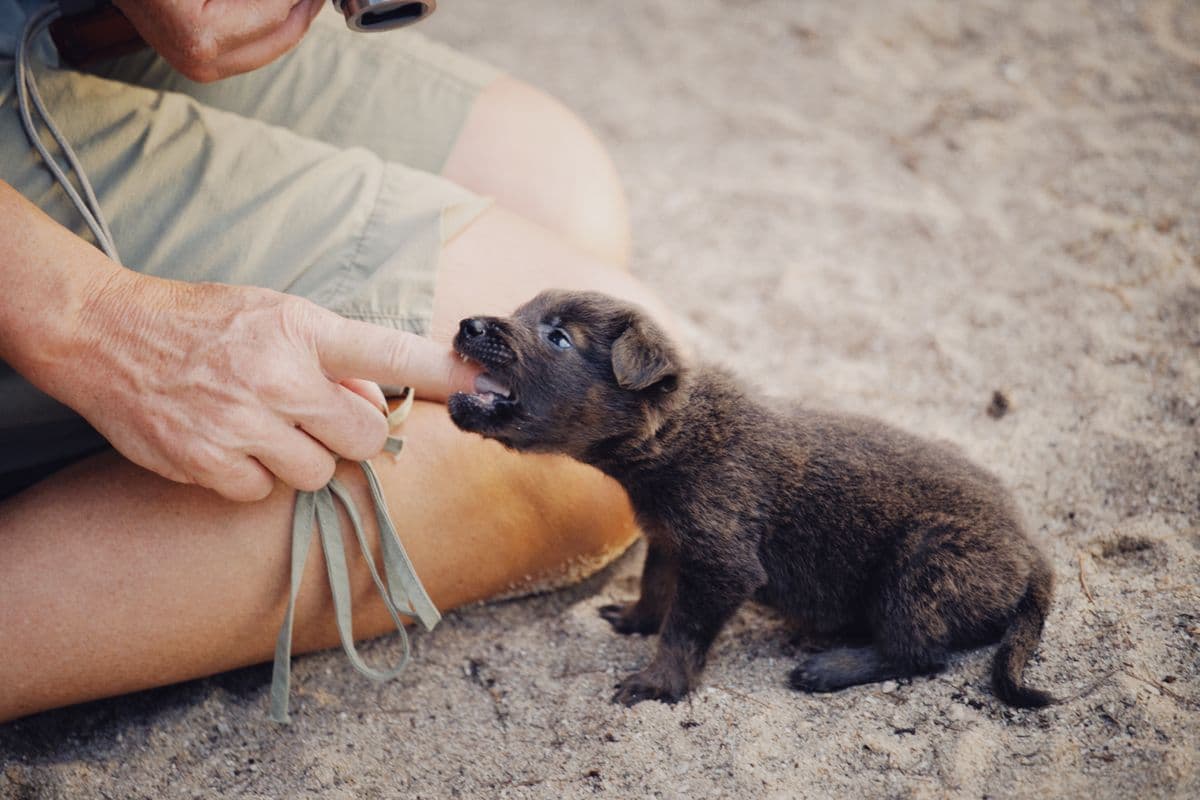
Hands become a target for one simple reason: they move a lot, they're right at puppy height during petting and play, and they're often the thing directly interacting with your puppy's mouth in the first place. This is normal play and exploration behavior, not aggression or a sign of a "difficult" puppy.1
What to Do the Next 30 Seconds
- Stop moving your hand. A moving hand looks like part of the game — going still removes the target instantly.
- Calmly disengage — stand up, turn away, or step back for about 10–20 seconds. No yelling, no dramatic reaction needed.
- Offer a toy once things are calm, before your hand goes back into the interaction.
- Resume gently. If your puppy re-engages with soft contact, that's success. If teeth come out hard again, repeat the disengage step.
If your puppy persists, chases your hand after you've disengaged, or immediately restarts, closing a door or briefly leaving the room can help make the point that biting ends the interaction entirely.2
Want a full plan, not just the first 30 seconds?
You have the immediate response. Get the logical next step for lasting change.
Why Hands Specifically
- Movement. Hands reaching, petting, or playing are constantly moving — and movement invites a puppy's mouth.
- Proximity during affection. A lot of petting happens at exactly the height and speed a puppy finds most engaging.
- Accidental reinforcement. If a hand pulls away fast when bitten, that quick movement can look like more game, not less.
What Not to Do
- Don't pull your hand away quickly — the fast movement often triggers more chasing, not less.
- Don't hit, flick, or physically correct — physical correction is discouraged by animal behavior organizations as a way to address normal puppy mouthing, and it can create fear or unpredictability in the relationship rather than reduce biting.3
- Don't play rough hand-wrestling games, especially early on — they can directly teach that hands are an appropriate target.
- Don't yell — a loud reaction can excite some puppies further rather than calm the interaction; going still is the more reliable default.1
When to End the Interaction Entirely
If redirecting and disengaging repeatedly isn't working in the moment, end the play session rather than continuing to cycle through corrections. A short break (crate time, a chew toy, a few minutes of calm) resets the interaction better than pushing through an escalating pattern.
When Hand Biting Is More Than Typical Play
Occasional hard nips during normal play are expected at this age. Signs that warrant more caution — stiff body language, a hard stare, growling that isn't play-growl, biting that draws blood repeatedly, or biting outside of clear play contexts — are different from loose, bouncy mouthing and are worth bringing to a certified trainer, behavior consultant, or veterinary behaviorist rather than continuing to manage alone.