Puppy Chewing
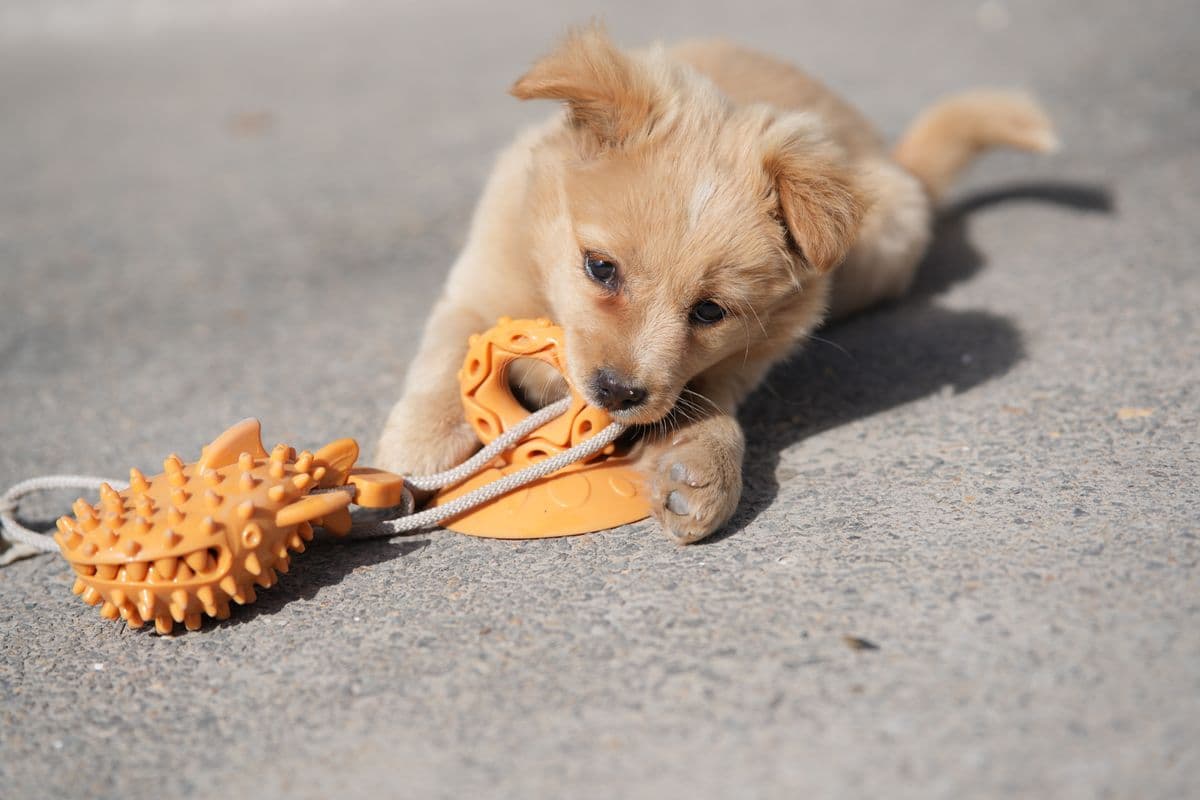
Puppy Chewing Everything: Why, and What Actually Helps
Quick answer
"Chewing everything" usually isn't one problem — it's normal exploration, teething discomfort, insufficient physical/mental stimulation, or excitement/frustration, each of which responds better to a slightly different approach. What changes the answer: which of these is actually driving it for your specific puppy, which is worth a few days of honest observation before assuming you know.
Chewing Is Normal — the Question Is What's Driving Too Much of It
All puppies chew as they explore the world, and virtually all chew more during teething, likely for gum relief.1 That's not the problem to solve. The problem is chewing that's destructive, frequent, or targeting things you need to protect — and that usually comes down to one or more of a few distinct causes.
The Real Causes
- Normal exploration. Puppies investigate the world with their mouths — this alone accounts for a lot of "puppy chewing" and gradually decreases with maturity and training.
- Teething discomfort. Especially pronounced from around 12 weeks through 6 months (see Puppy Teething).
- Insufficient stimulation. A puppy without enough physical exercise or mental engagement (food puzzles, training, novel experiences) often chews more — chewing becomes the outlet for unmet needs.2
- Frustration or excitement. Chewing at a leash, a gate, or an object near something exciting the puppy can't reach (another dog, a squirrel) is a distinct pattern from bored or exploratory chewing.2
- Chewing specifically during your absence. If chewing is notably worse when you're not home, that's worth distinguishing from general chewing — it may connect to Puppy Home Alone rather than being a chewing-specific issue at all.3
A Short Way to Tell What's Driving It
Keep a quick log for a few days: when does chewing happen (bored downtime? right when you leave? during a specific type of excitement?), and what's being chewed (anything reachable, vs. specific high-value items). A pattern usually emerges fast.
What Actually Helps
- Manage the environment first. Puppy-proof reachable areas — this isn't giving up on training, it's preventing rehearsal of the wrong behavior while training is still in progress.
- Provide real outlets, not just a toy sitting in a corner: food puzzle toys, appropriate chew items, and enough physical/mental engagement across the day.2
- Redirect and reward, not punish. Catch your puppy chewing something inappropriate, calmly redirect to an appropriate item, and reward the switch — this teaches what to do, not just what not to do.
- Supervise or confine when you can't watch directly, consistent with the same principle used in potty training.
- Reassess if it's specifically an alone-time pattern — see Puppy Home Alone rather than treating it purely as a chewing problem if that's the pattern your log reveals.
Common Mistakes
- Assuming all chewing is teething and missing a stimulation gap.
- Punishing chewing after the fact — puppies don't connect a delayed correction to the act, and it doesn't reliably reduce the behavior.
- Removing all opportunity to chew rather than redirecting to appropriate outlets — chewing is a real need, not a habit to eliminate entirely.
- Not distinguishing "chews everything, all the time" from "chews specifically when left alone," which point toward different fixes.
Decision Table
| Pattern | Likely Driver | What Helps Most |
|---|---|---|
| Chews anything reachable, fairly constant | Exploration + insufficient outlets | More appropriate chew access, more stimulation |
| Worse around 12 weeks–6 months, gums seem involved | Teething | See Puppy Teething |
| Chews at gates/leashes near something exciting | Frustration | Redirect before/during the trigger, not after |
| Notably worse specifically when you're not home | Possibly alone-time related | See Puppy Home Alone |
What to Do Today
- Log chewing incidents for a few days before assuming a single cause.
- Do one puppy-proofing pass on the most-targeted area.
- Make sure appropriate chew items are actually within easy reach, not just available somewhere in the house.
When to Call a Professional
Chewing that seems tied to genuine distress (not just excitement or boredom) — especially if paired with signs suggesting separation-related distress — is worth a veterinarian or certified behaviorist conversation rather than continued at-home troubleshooting alone.
Want a plan built around your puppy?
Answer a few quick questions and get a personalized starting point.