Puppy Biting
Why Does My Puppy Bite More at Night?
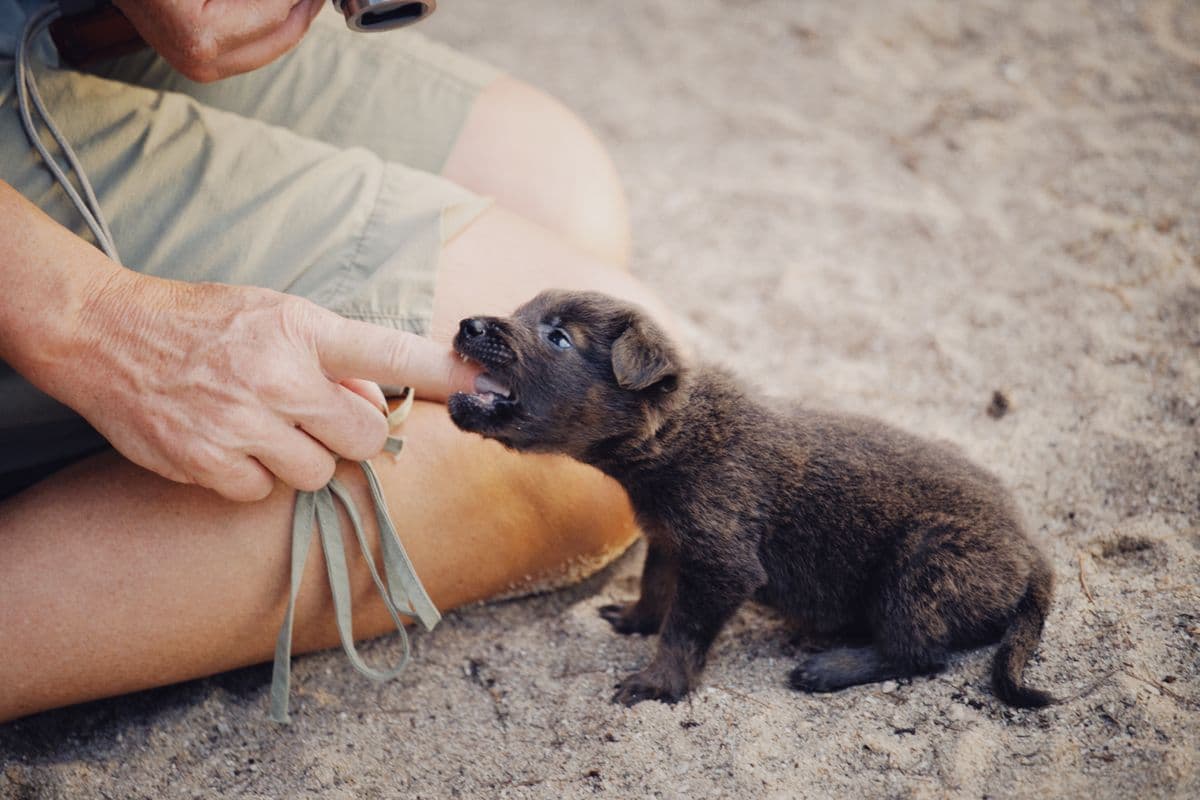
Many owners and trainers report a predictable evening spike in puppy biting, restlessness, and general chaos — sometimes called the "witching hour," a piece of common owner/trainer terminology rather than a medical or veterinary term.1 The most commonly reported explanation is a combination of accumulated stimulation over the day and insufficient rest, but it's worth being direct about the evidence here: this is a widely observed pattern, not something we found established as a confirmed cause by a veterinary or board-certified behaviorist source. Treat overtiredness/overstimulation as a plausible, worth-checking factor — not a certainty.
What's Commonly Reported (and What Isn't Established)
- Commonly reported by trainers: evening biting spikes often coincide with a long day of activity and less structured rest, and puppies who get more consistent daytime naps often show less evening chaos.
- Genuinely established by veterinary sources: "arousal" and impulsivity are recognized concepts in veterinary behavioral medicine generally,2 and ruling out pain or a medical cause is a standard first step before assuming any behavior is purely about tiredness or excitement.2
- Not established as fact: a specific causal link between accumulated daytime stimulation and evening biting timing. It's a plausible, frequently observed pattern — treat it as a reasonable first thing to check, not a confirmed mechanism.
What to Try Tonight
- Check the day's rest, not just activity. If naps were skipped or interrupted, an earlier, calmer wind-down tonight is a reasonable first thing to try — see the Daily Puppy Schedule for how rest fits into the rest of the day.
- Lower the stimulation, don't add more. More vigorous play to "burn it off" often makes evening biting worse rather than better, per common trainer observation — a calm chew toy and quiet time is usually the better bet than another round of fetch.
- Use the standard biting response. Stop movement, calmly disengage, redirect to an appropriate toy — the same default response used everywhere else on this site (see Puppy Biting Hands), not a special nighttime technique.3
- Start the wind-down earlier than feels necessary. Lower the household's energy 30–60 minutes before the final potty break and bedtime, rather than going from full play straight into the crate.
- Track it for a few nights. If evening biting consistently follows short-nap days and eases on well-rested days, that's useful information specific to your puppy — even without a confirmed general mechanism.
Want the full 5-day reset, not just tonight?
You have a tonight-focused list. Get a structured, multi-day approach.
If Tonight's Approach Doesn't Help
If a calmer, better-rested evening routine doesn't reduce the pattern over a week or two, or if the behavior seems to go beyond typical mouthing (real aggression signals, injury-level biting, or behavior that doesn't fit the usual play pattern), that's a reasonable point to involve a certified trainer, behavior consultant, or veterinary behaviorist rather than continuing to guess at home.
Sources
- Multiple trainer/pet-industry sources (e.g. Kinship, Adopt a Pet, ProgDog, Manners for Mutts) use "witching hour" as informal owner/trainer terminology — cited only to support that the term itself is common usage, not to support any causation claim
- MSD Veterinary Manual, "Behavior Problems of Dogs"
- VIN Veterinary Partner, "Mouthing and Play Biting in Puppies"