Puppy Training
Rewards and Treats: Making Reward-Based Training Actually Work
Quick answer
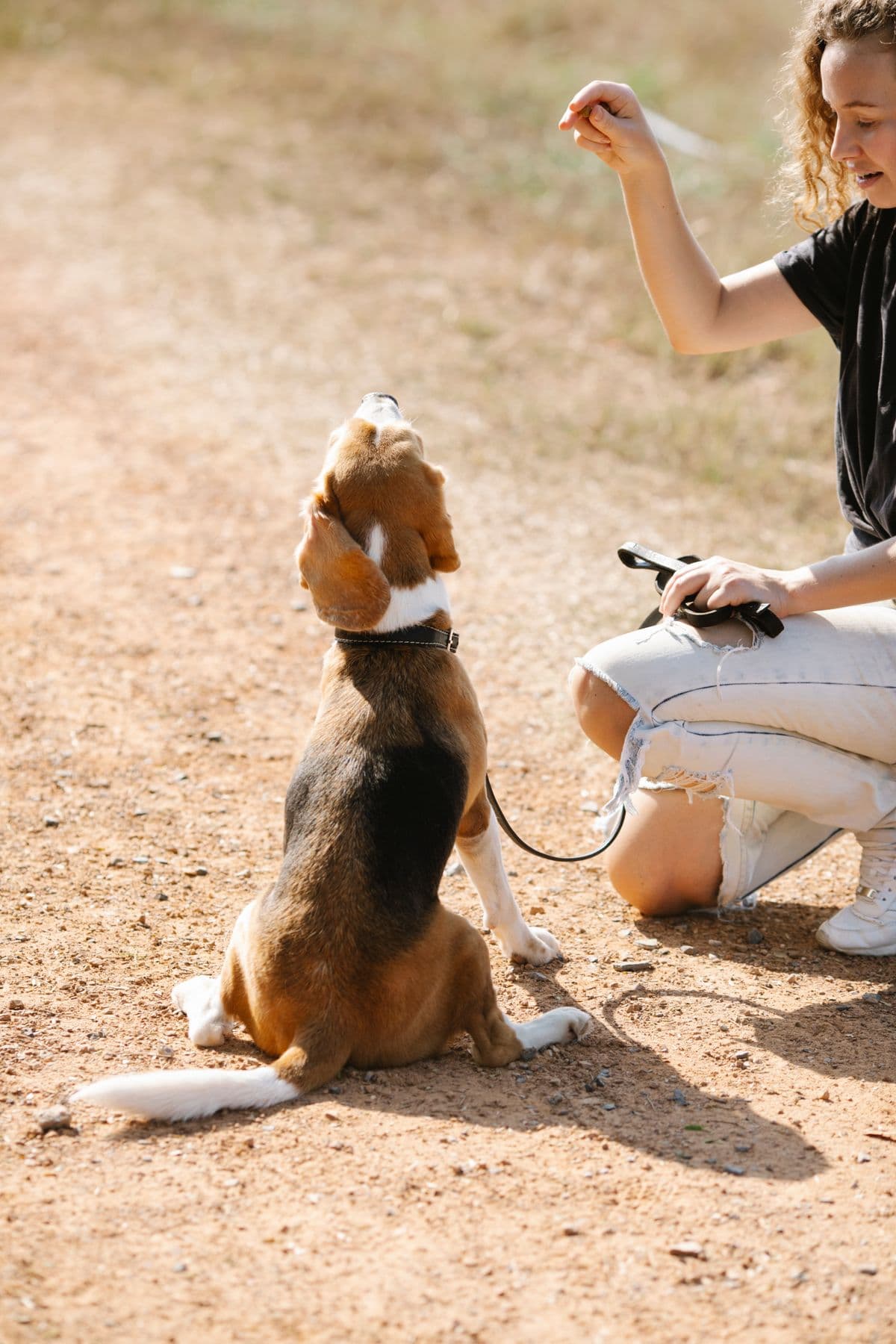
A reward is anything your puppy will work for — most often food, but also play, praise (when it's meaningfully paired with something your puppy already values), and life rewards like going outside. Praise alone, without ever being paired with a real reward, tends to carry little weight on its own.
Why Reward-Based Training Works
The current evidence-based standard from veterinary behavior organizations is that reward-based methods — reinforcing what you want, removing reward for what you don't — are both more effective and better for welfare and the human-animal relationship than aversive methods, with no role for aversive training at any stage.1
What Actually Counts as a Reward
Food is the most common and often most efficient reward, especially early in training. Play (a quick tug or toy toss) and life rewards (the chance to go outside, greet a friend, sniff something interesting) also work well and add variety. Praise alone tends to be weak as a standalone reward unless it's been consistently paired with something your puppy already values — otherwise it doesn't reliably predict anything good is coming.
Treat Practicalities
- Size: Pea-sized or smaller for most training treats — you're doing many repetitions, not feeding a meal.
- Value: Keep a range — lower-value treats (kibble) for easy, familiar behaviors, higher-value treats (real meat, cheese) for harder tasks or high-distraction environments.
- Frequency and fading: Reward every success early on, then gradually shift to rewarding only the better repetitions as a behavior becomes reliable — but don't fade rewards out entirely; intermittent, unpredictable rewards actually keep behaviors strong over the long run.
- Overall diet: Factor training treats into your puppy's daily food intake rather than treating them as separate extras — ask your veterinarian how to balance this if you're using a lot of treats during an intensive training period.
Timing Beats Everything Else
A reward given even a second or two late can end up reinforcing the wrong thing — whatever your puppy was doing at the moment the reward actually arrived, not what you intended. A marker word ("yes!") or clicker, delivered the instant the correct behavior happens, solves this by marking the exact moment, with the actual reward following right after.
Reward Value Reference
| Reward type | Best used for |
|---|---|
| Low-value treat (kibble) | Easy, familiar behaviors, low-distraction settings |
| High-value treat (meat, cheese) | New/hard behaviors, high-distraction settings, recall |
| Play/toy | Variety, high-energy puppies, real-world rewards outdoors |
| Life rewards (going outside, greeting someone) | Once a behavior is well established — the "real world" version of the reward |
| Praise alone | Weak on its own — most useful paired consistently with another reward, not as a substitute |
See how rewards fit your puppy's feeding plan
See how training rewards fit into your puppy's daily feeding plan.
What to Do Today
Sort your current treats into a rough low/high-value ranking. Use a marker word (or clicker) consistently for your next few training sessions if you haven't been.
Common Mistakes
- Relying on praise alone as if it's equivalent to a treat.
- Rewarding too late to actually mark the right behavior.
- Fading treats out completely instead of shifting to intermittent rewards.
- Using treats so large or frequent that they meaningfully affect your puppy's diet without adjusting meals accordingly.
When Professional Help May Be Appropriate
If your puppy shows no interest in food, play, or any reward you try — not just pickiness, but a consistent lack of motivation — that's worth mentioning to your veterinarian, since it could reflect something beyond a training preference.