Puppy Training
Teaching Your Puppy Their Name and Real Attention
Quick answer
Your puppy's name should function as an attention-getter — "look at me, something's coming" — not as a command in itself. Teach it by saying the name, marking the instant your puppy looks at you, and rewarding immediately.
Name vs. Command
Keeping these distinct matters: the name means "check in with me," while a specific cue (like "watch me") can be taught separately for sustained eye contact. This distinction keeps the name useful as a quick attention-getter rather than something your puppy tunes out from overuse.
How to Teach It
- Say your puppy's name once, in a normal tone (not repeated, not shouted).
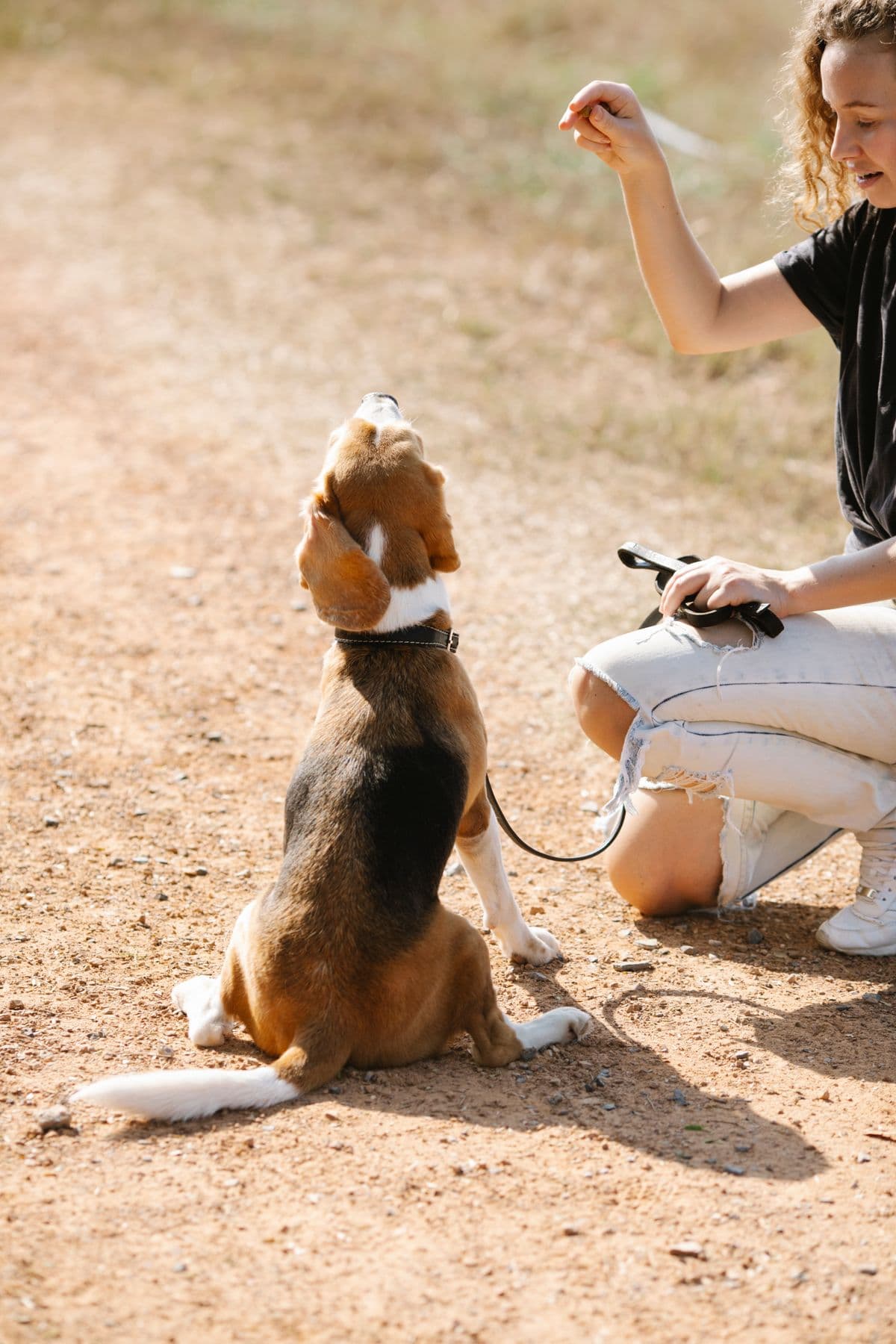
- The instant your puppy looks at you, mark the moment (a clear word like "yes!" or a clicker) and reward immediately.
- Repeat in short bursts, in a low-distraction setting first.
- Gradually practice with mild distractions, then more challenging ones, before expecting reliable response in an exciting environment.
Timing Matters
The mark should come within about half a second of your puppy looking at you, with the reward following immediately after. A delay of even a second or two can blur what's actually being rewarded.
Checklist
- Say the name once, not repeatedly
- Mark the instant of eye contact
- Reward immediately after the mark
- Practice in a quiet space before adding distraction
- Don't use the name for corrections — it should stay a purely positive cue
Redirecting biting your bigger challenge?
Strong attention skills also make redirecting biting easier — if that's your bigger challenge right now, start here instead.
What to Do Today
Run 3–5 short name-and-mark reps in a quiet room. Resist repeating the name if your puppy doesn't respond immediately — instead, get closer or reduce distraction and try again.
Common Mistakes
- Repeating the name over and over until the puppy responds — teaches that the name can be ignored the first few times.
- Using the name right before something unpleasant (vet nail trim, bath) without pairing it back to something positive.
- Expecting instant reliability around exciting distractions before building up to them.
When Professional Help May Be Appropriate
If your puppy consistently doesn't orient to sound or seems not to notice their name even up close in a quiet room, that's worth mentioning to your veterinarian to rule out a hearing-related cause before assuming it's purely a training issue.