Puppy Training
Puppy Leash Training and Equipment
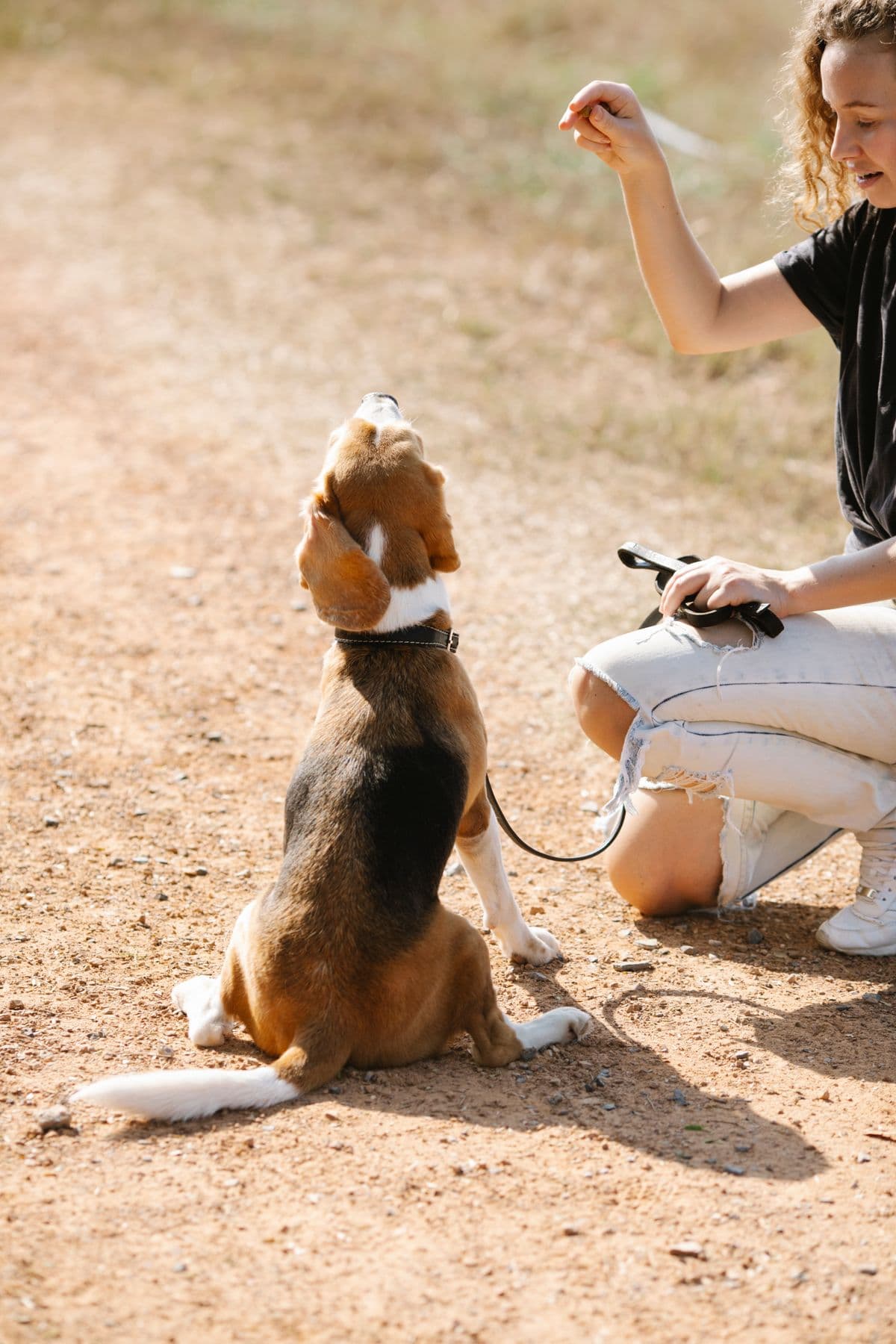
Quick answer
For most puppies, a well-fitted harness is the safer walking equipment choice — it distributes pressure across the chest rather than concentrating it on the neck and throat, which matters especially for small breeds and any puppy still learning not to pull. Loose-leash walking itself is taught through reward, not equipment alone — a harness makes pulling safer, not automatically less frequent.
Harness vs. Collar — What the Evidence Actually Shows
A body harness puts minimal pressure on delicate neck tissue and is less likely to cause injury than a collar if your puppy pulls, which is especially relevant for toy/small breeds and any dog prone to tracheal issues.12 This isn't a training shortcut, though — an actual controlled study found dogs in a back-clip harness sometimes pulled harder, not less, than the same dogs on a collar, with no meaningful difference in stress-related body language between the two.3 The honest takeaway: choose a harness primarily for safety, and treat loose-leash walking as a skill you still have to teach, not something equipment solves for you.
A front-clip harness (which redirects a pulling dog back toward you rather than allowing full forward momentum) is often a reasonable choice specifically for reducing the mechanical effectiveness of pulling, separate from the safety benefit of moving pressure off the neck.
We're not naming or recommending specific harness brands or products here — fit matters more than brand, and this page focuses on what to look for, not a specific purchase.
Fitting a Harness
It should not restrict shoulder/front-leg movement, should be snug enough that your puppy can't back out of it, and shouldn't rub or chafe (check behind the elbows and around the neck opening after wear).2
Teaching Loose-Leash Walking
- Start indoors or in a quiet, low-distraction space.
- Reward your puppy frequently for walking near you with slack in the leash — don't wait for a "perfect" heel position.
- The instant the leash goes tight, stop moving. Wait for slack (your puppy turning back toward you, or the leash naturally loosening) before continuing — this teaches that pulling doesn't get anywhere, without any leash correction.
- Gradually add real-world distraction once your puppy is reliable in a low-distraction setting.
- Keep early walks short — a five-minute successful walk beats a twenty-minute frustrating one.
Do This / Not This
| Situation | Do This | Not This |
|---|---|---|
| Choosing equipment for a puppy | A well-fitted harness | A standard flat collar for walks, especially for small/brachycephalic breeds |
| Puppy pulls toward something | Stop moving, wait for slack | Jerk the leash, or keep walking through the pull |
| Puppy walks nicely near you | Reward frequently | Only reward at the "end" of a walk |
| Puppy struggles with leash manners | Shorter, more frequent practice sessions | One long walk expecting perfect behavior |
Want leash steps paced to your puppy?
Get leash-training steps paced to your puppy's actual progress.
What to Do Today
Check your current harness fit against the guidance above. Practice the stop-and-wait technique for a few minutes in a low-distraction area.
Common Mistakes
- Assuming a harness alone will stop pulling.
- Using a collar-and-leash combination that puts pressure on the neck for a puppy that pulls.
- Leash corrections/jerks — not consistent with reward-based training.
- Expecting loose-leash walking in a high-distraction environment before it's solid in a quiet one.
When Professional Help May Be Appropriate
If your puppy shows significant fear, lunging, or reactivity toward specific triggers on leash (not just ordinary excitement/distraction), that's a different, more involved issue worth a certified trainer or veterinary behaviorist's help rather than continued basic leash practice alone.