Puppy Biting
My Puppy Is Suddenly Biting More Than Before
By Dog Plan Lab Editorial TeamUpdated August 29, 2026
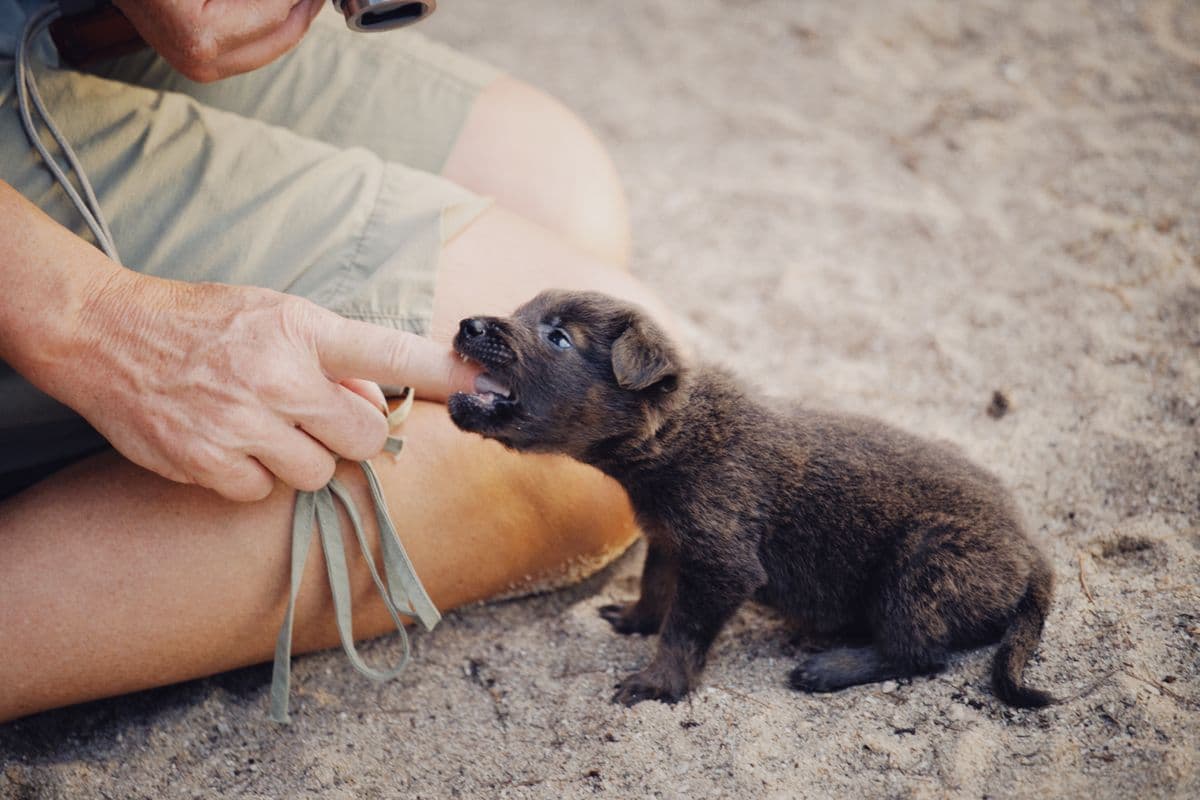
Quick answer
A sudden increase almost always has an identifiable trigger — most commonly a teething flare-up, a rest/schedule disruption, a routine change, or (less often) pain — and identifying which one applies changes what helps.
Common Triggers
- Teething flare-up — different teeth erupt at different points over months (see Puppy Teething Timeline).
- Rest/schedule disruption — see Puppy Sleep; "overtiredness causes biting" remains a commonly reported pattern, not a proven mechanism.
- Recent environmental/routine change.
- Reduced consistency in how biting is handled.
- Pain or illness — less common, but real.
What to Do
- Check for teething signs.
- Review recent household consistency.
- Check recent sleep/rest disruption.
- Consider other recent changes.
- If nothing behavioral explains it, talk to your vet.
Troubleshooting
| What changed | Likely trigger | What to do |
|---|---|---|
| Puppy is 12 weeks–6 months | Possible teething flare-up | See Puppy Teething; ensure chew outlets |
| Recent nap/schedule disruption | Rest-related, commonly reported | Re-establish consistent rest |
| Recent household/environment change | Adjustment | Re-tighten consistency |
| Redirection lapsed recently | Consistency gap | Get everyone aligned |
| No identifiable trigger or other unusual signs | Possible medical cause | Talk to your veterinarian |
Want to get back on track?
Get a plan built around your puppy's age and current pattern.
Common Mistakes
- Assuming earlier progress "didn't work."
- Escalating technique out of frustration.
- Not considering rest first.
- Ignoring an unexplained sudden change.
Safety and Behavior Red Flags
A sudden increase paired with stiffer, more intense body language rather than just frequency — see Is My Puppy Being Aggressive, or Just Playing? Paired with illness signs — see your vet.