Puppy Biting
Is My Puppy Being Aggressive, or Just Playing?
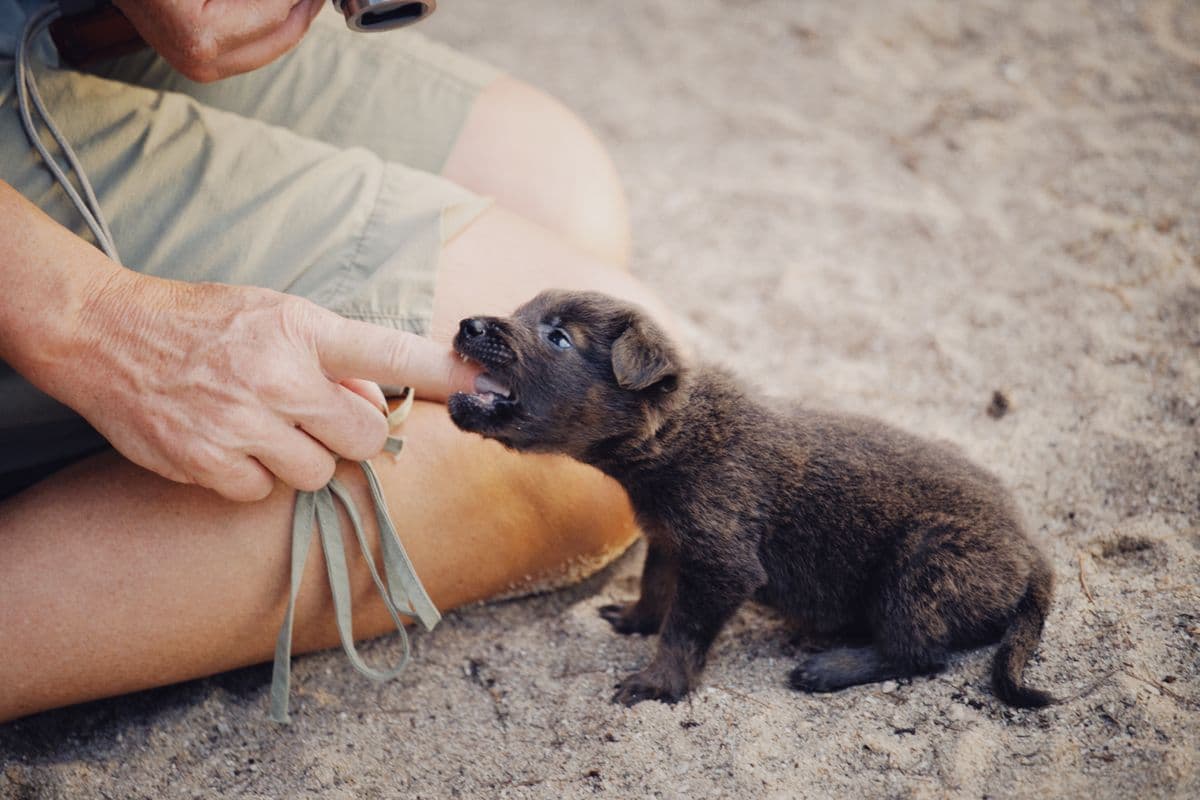
Quick answer
Most biting, including growling during play, is normal — watch for body language that's stiff and intense rather than loose and bouncy, and behavior that escalates rather than settles when you pause.
Growling Is Often Just Part of Play
Many puppies growl happily during tug or wrestling — normal vocal excitement, not automatically a warning sign. Context and body language matter more than the sound.
Reading the Difference: Body Language Over Any Single Signal
| Typical play | Signals worth a closer look |
|---|---|
| Loose, wiggly body | Stiff, rigid body |
| Bouncy movements; play bows | Fixed, direct stare |
| Self-interrupting, re-engages voluntarily | No pausing; escalating intensity |
| Settles when you pause | Continues or intensifies when you pause |
| Directed at toys/hands during play | Directed at you defending an item or space |
No single item proves anything alone — the overall pattern, especially whether behavior settles when paused, matters most.
A Word on "Aggression"
This page won't diagnose aggression — that's a real clinical category assessed by a professional looking at the full picture. This page helps you recognize when that kind of look is worth getting.
Resource Guarding Is a Related but Distinct Pattern
Stiffening, growling, or snapping specifically when approached near food/toys/objects — see Leave It / Drop It for prevention; repeated guarding is a reason for professional input.
When to Get Professional Help
Bring in a certified trainer, behavior consultant, or veterinary behaviorist if you see:
- Stiff, intense body language replacing loose play, especially as a change from before
- Biting that escalates rather than settles when paused/redirected
- Growling/snapping/biting tied to guarding food, objects, or space
- Bites that consistently draw blood or seem notably harder than typical for no clear reason
- Any bite involving a child, regardless of how minor (see My Puppy Keeps Biting My Child)
- No meaningful change despite consistent, correct management over roughly 6 months — the AKC's chief veterinarian names this as a reasonable checkpoint1
None of these alone mean a serious problem — they mean an actual professional assessment is worth getting rather than continued guessing.
Decision Guide
| What you're seeing | What it usually means | What to do |
|---|---|---|
| Growling during tug/wrestling, loose body | Normal play vocalization | Continue standard management |
| Stiff body, fixed stare, no self-interruption | Worth a closer look | Reduce intensity, observe, consider professional input |
| Escalates rather than settles when paused | Worth a closer look | Same as above |
| Guarding food/objects/space | Distinct, related pattern | See Leave It / Drop It; professional input if repeated |
| Involves a child | Always take seriously | See My Puppy Keeps Biting My Child; involve a professional |
Common Mistakes
- Treating any growl as proof of aggression.
- Ignoring a genuine pattern shift.
- Self-diagnosing.
- Waiting once red flags are present.
Safety and Behavior Red Flags
See "When to Get Professional Help" above — this page's core safety content.
Working through everyday biting alongside this?
Get a plan built around your puppy's age and how things are going.