Puppy Biting
My Puppy Keeps Biting My Child
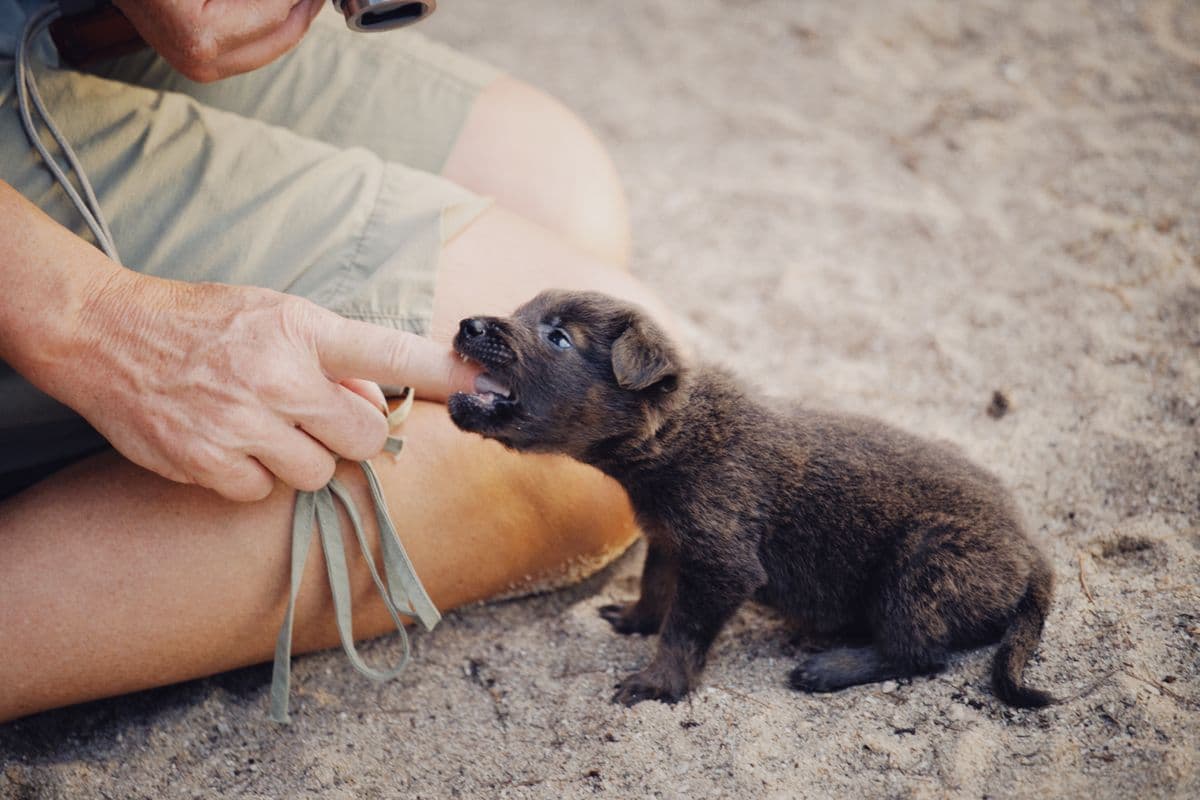
Quick answer
This is an adult-managed problem — puppies often get mouthier around kids because fast, unpredictable movement raises arousal, so the fix is adult-led management and technique, not asking a child to respond correctly in the moment.
Why Puppies Get Mouthier Around Kids Specifically
Fast, high-pitched, unpredictable movement raises arousal more than calm adult movement — not a reflection on the child.
This Is Not the Child's Job to Manage
A young child can't reliably read body language or execute technique consistently. Responsibility sits with the supervising adult, every time (see Socializing Your Puppy With Children for the full framework this builds on).
What to Do When It's Happening
- Calmly interrupt — step in between puppy and child if needed, without yelling or grabbing roughly.
- Redirect your puppy to a toy, away from the child.
- If overstimulated, end the interaction — a short separation resets things.
- Reintroduce shorter, more structured interaction once calm.
Reducing How Often It Happens
- Give your puppy an outlet for the driving energy before high-energy time with kids (see Teaching Calm & Settle).
- Keep interactions structured and adult-led rather than open-ended, while this is being worked on.
- Teach your child to go still and quiet rather than run/scream — a helpful addition, not the primary fix.
Troubleshooting
| Pattern | Likely driver | What to do |
|---|---|---|
| During excited, fast-moving play | Arousal raised by the child's movement | Structure play, add breaks, redirect to a toy |
| When the child approaches suddenly | Startle/overstimulation | Teach the child to let the puppy approach; supervise closely |
| Escalating, not improving with management | Needs a closer look | See "Safety Red Flags" |
Want household-specific guidance?
Get a plan built around your puppy's age and your household.
Common Mistakes
- Expecting the child to correct the behavior.
- Leaving them unsupervised "to work it out."
- Scolding the child.
- Punishing the puppy in a way that adds fear.
Safety and Behavior Red Flags
Any growling, snapping, or skin-breaking bite directed at a child warrants an immediate change and a conversation with your vet or a certified trainer/behaviorist — not wait-and-see. These are the same escalation criteria named in Socializing Your Puppy With Children.