Puppy Fear
My Puppy Is Scared of People — What to Do
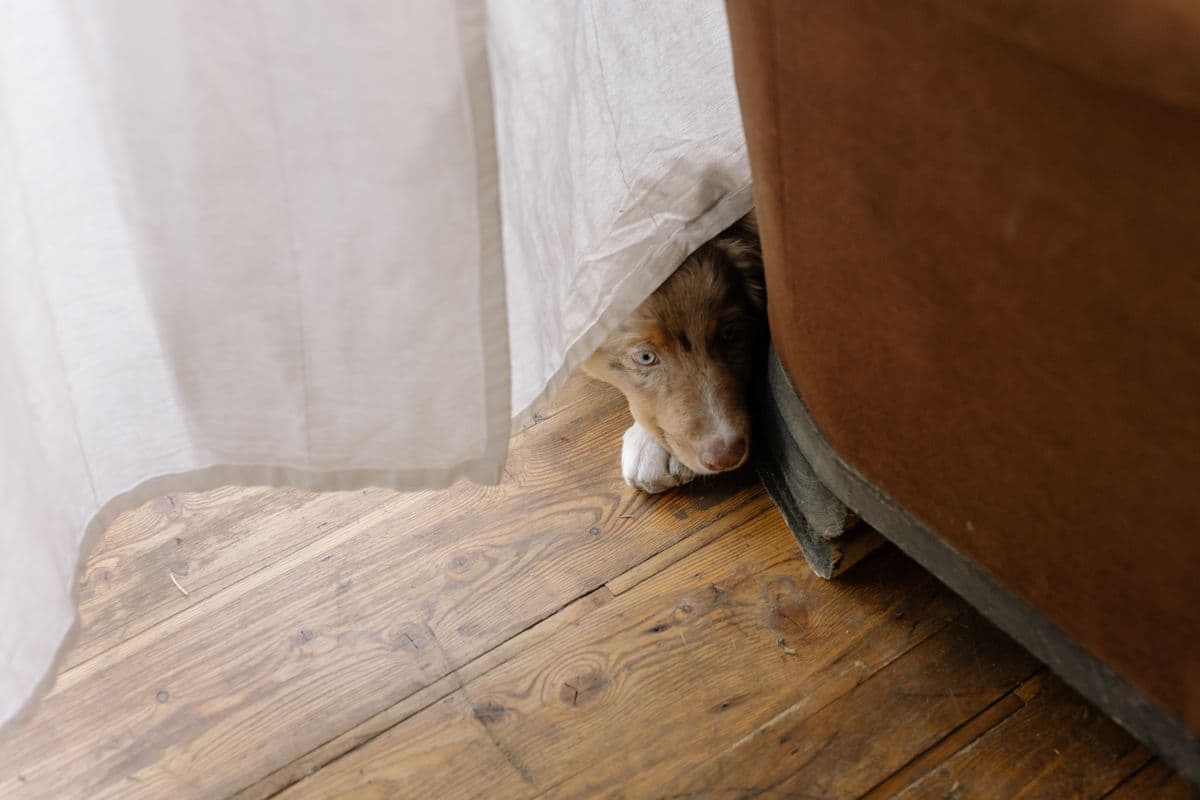
Quick answer
Don't force interaction, and don't let well-meaning strangers rush in to "prove" they're friendly — give your puppy distance and control, pair people's presence with something good, and let your puppy choose to approach at their own pace.
Give Your Puppy Control
A puppy who feels able to retreat, and isn't cornered or forced into contact, recovers confidence faster than one who's held in place for a stranger to pet. Let your puppy set the distance.
The Recovery Approach
- Identify a distance where your puppy notices a person but stays reasonably calm — not already fearful.
- Reward calm behavior at that distance (treats, calm praise).
- Let the person ignore your puppy initially — no direct eye contact, no reaching, no looming — while you reward your puppy for staying calm nearby.
- Only if your puppy chooses to approach, allow contact — don't script an approach on their behalf.
- Gradually work toward closer distances and more direct interaction, only as your puppy's comfort holds up at each stage.
What Well-Meaning People Get Wrong
Reaching toward a fearful puppy, looming over them, or insisting "dogs love me" and pushing forward anyway all make things worse, not better — even from someone with good intentions. Politely asking people to ignore your puppy at first, rather than greet them, is one of the more effective things you can do.
Want a recovery plan for your puppy?
Get a recovery plan for your puppy's specific fear pattern.
Common Mistakes
- Forcing physical contact to "get it over with."
- Letting strangers approach without warning.
- Scolding or punishing fearful behavior (barking, retreating) — this adds a second bad experience to an already difficult moment rather than helping.
If your puppy seems fearful of one specific type of person consistently (people wearing hats, or a specific gender/height), that's useful information — start desensitization work specifically with that category rather than generic "people" exposure.
When Professional Help May Be Appropriate
If fear around people is intense, doesn't improve with a slow, consistent approach over several weeks, or is accompanied by growling/snapping (not just retreat), a certified trainer or veterinary behaviorist should be involved.