Puppy Fear
My Puppy Is Scared of a Sound — What to Do
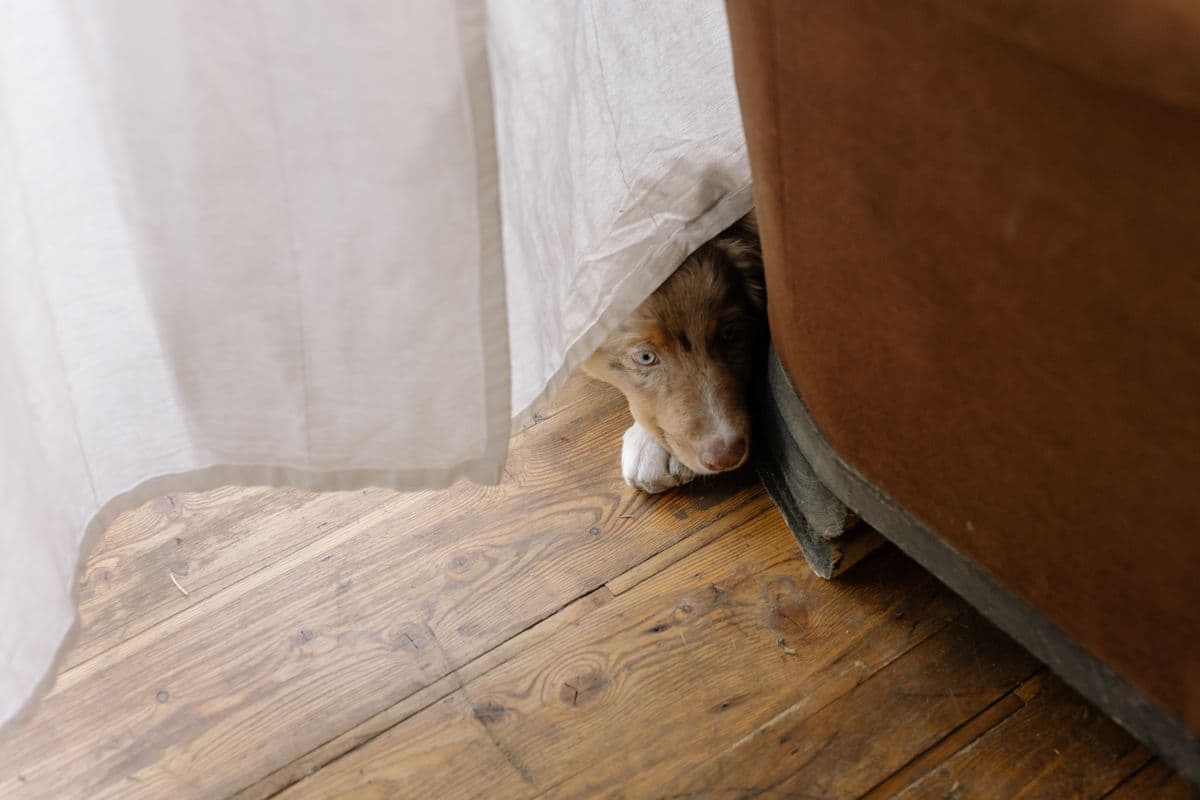
Quick answer
For mild fear, gradual controlled exposure to a low-volume recording, paired with something positive, can help. For moderate-to-severe fear, this should be done under the guidance of a qualified trainer or veterinary behaviorist — done incorrectly, it can make fear worse, not better.
The Method: Desensitization and Counterconditioning
The standard, evidence-based approach for an established sound fear is systematic desensitization combined with counterconditioning: your puppy is first conditioned to relax on cue (see Teaching Calm & Settle) in the absence of the trigger, then a very low-level version of the sound is introduced while they stay relaxed, gradually increasing intensity only as comfort holds.1 This is different from simply exposing a puppy to a sound repeatedly and hoping they "get used to it" — that approach, called flooding, risks making fear significantly worse.1
Why This Needs Real Care
Getting the exposure level wrong — too loud, too fast — can increase fear and anxiety rather than reduce it.1 For anything beyond mild, occasional startle, this should be done under the direction of a qualified trainer or veterinary behaviorist who can help judge the right starting intensity and pace.1
A Practical Starting Point for Mild Fear
- Make sure your puppy can relax on cue in a calm environment first (see Teaching Calm & Settle).
- Introduce a recording of the sound at a volume low enough that your puppy shows no fear response at all.
- Pair that low-level sound with something genuinely positive.
- Only increase volume once your puppy is consistently comfortable at the current level — this can take many sessions.
- If at any point your puppy shows fear, you've moved too fast — go back to the last comfortable level.
An Important Caution
Confining a fearful puppy during exposure to a real, uncontrolled version of the sound (an actual thunderstorm, real fireworks) is not the same as a controlled desensitization session, and some puppies can panic and injure themselves if confined during genuine distress — don't attempt to "practice" during a real event.2
Want a desensitization plan?
Get a desensitization plan matched to how severe your puppy's reaction is.
Common Mistakes
- Flooding — exposing at full intensity and waiting it out.
- Confining your puppy during an actual, uncontrolled loud event as if it were a training session.
- Increasing volume before your puppy is genuinely comfortable at the current level.
- Attempting a moderate-to-severe case entirely without professional guidance.
If fear returns or worsens partway through a desensitization plan, that's a sign to slow down or get professional input, not to push through faster.
When Professional Help May Be Appropriate
Moderate to severe fear of any sound should involve a qualified trainer or veterinary behaviorist from the start, not just if home efforts fail — the guidance is explicit that this level of case benefits from professional pacing.1 Any signs of panic, self-injury attempts, or extreme distress during a loud event also warrant a veterinary conversation.