Puppy Socialization
Socializing Your Puppy With Other Dogs
Quick answer
Dog-to-dog socialization does not require the dog park, meeting every dog, or free-for-all play — controlled settings (vaccine-verified puppy classes, supervised one-on-one playdates with known healthy dogs, or simply calm proximity to other leashed dogs) build the same social skills with far less risk.
Skip the Dog Park, at Least for Now
Dog parks are hard to control: you don't know the health, vaccination status, or temperament of the dogs there, and a single bad experience — being bullied, overwhelmed, or scared by an out-of-control interaction — can teach a puppy that unfamiliar dogs are frightening.1 A reasonable general guideline from professional trainers is to avoid dog parks until at least 6 months old, and even then to go in with clear judgment about whether it's actually a controlled environment that day.2
What Controlled Exposure Looks Like
- Vaccine-verified puppy classes with a structured format — often a better source of genuine social learning than an unstructured play free-for-all.
- One-on-one playdates with a known, healthy, vaccinated, well-tempered adult dog or puppy — easier to supervise and interrupt than a group setting.
- Neutral proximity: walking near other leashed dogs without necessarily interacting — this teaches a puppy that other dogs aren't automatically exciting or threatening, which is its own valuable skill, distinct from active play.
Supervising Play, When It Happens
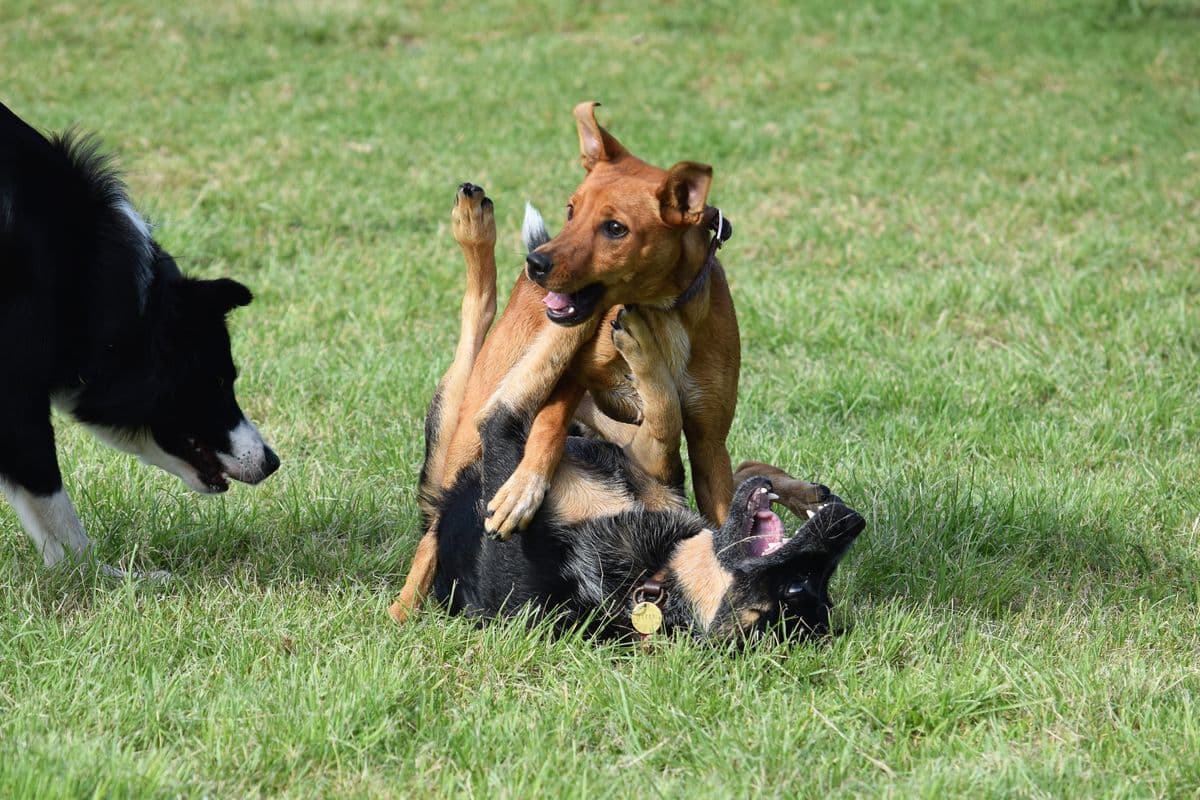
Watch body language actively, and interrupt if play looks one-sided, if one dog is always pinned or chased, or if it escalates toward stiff, fast, or high-intensity interaction.3 Remove toys from group settings to avoid guarding conflicts. If your puppy seems overwhelmed, bullied, or scared, remove them — don't wait to see if it resolves on its own.3
Want a dog-to-dog socialization plan?
Get a dog-to-dog socialization plan matched to your puppy's temperament.
What to Do Today
- Choose one controlled setting this week — a vaccine-verified class or a playdate with a known dog — rather than a dog park.
- Watch body language throughout any interaction, not just at the start.
- Interrupt one-sided or escalating play before it becomes a problem.
- Practice neutral proximity (walking near other dogs without interacting) as its own valuable skill, not just a stepping stone to play.
If your puppy seems to want to interact with every dog they see and struggles to walk calmly past one, that's a training/impulse-control opportunity (see Training Around Distractions), not necessarily a sign they need more dog-to-dog play time.
Common Mistakes
- Treating the dog park as a socialization requirement.
- Assuming all play is good play regardless of how it looks.
- Not removing a puppy from an interaction that's becoming one-sided or overwhelming.
- Skipping vaccination verification for the sake of convenience.
When Professional Help May Be Appropriate
If your puppy shows fear, avoidance, or defensive behavior around other dogs — not just disinterest — see Puppy Fear: Scared of Dogs. If a specific incident (an attack, a scary encounter) has already happened, see Bad Experience.